|
|
|
|
|
I never met a student in
Exeter who owned a car. We always used the extensive public transport
system which existed in Exeter and the Devon countryside at that
time. It was extensive, cheap, comfortable and highly effective.
Small steam trains with one or two carriages puffed along branch lines to country stations where station masters in smart uniforms greeted the passengers. 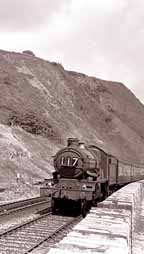 Two major railways - the Southern and the Great
Western - ran through Exeter and in addition branch lines radiated
out in all directions. The Teign Valley line twisted around the
small villages and sometimes took the main line expresses, if
heavy seas at Dawlish closed the Great Western. All the small
seaside towns - Dawlish, Sidmouth, Seaton, Exmouth, Budleigh
Salterton were served by rail and lines penetrated inland as
for as Moreton Hampstead. They were all parts of a large organisation
which still maintained a vast communications network and this
was always there if you were in difficulties. If you could reach
a country station, you were safe because you were then in the
system. All this was still in place in the late 1950s. The Beeching
nightmare was many years ahead in the future. We used the small
trains a lot and we took the rail network for granted. It was
true public service and the chances are we will never
see anything like it again. Two major railways - the Southern and the Great
Western - ran through Exeter and in addition branch lines radiated
out in all directions. The Teign Valley line twisted around the
small villages and sometimes took the main line expresses, if
heavy seas at Dawlish closed the Great Western. All the small
seaside towns - Dawlish, Sidmouth, Seaton, Exmouth, Budleigh
Salterton were served by rail and lines penetrated inland as
for as Moreton Hampstead. They were all parts of a large organisation
which still maintained a vast communications network and this
was always there if you were in difficulties. If you could reach
a country station, you were safe because you were then in the
system. All this was still in place in the late 1950s. The Beeching
nightmare was many years ahead in the future. We used the small
trains a lot and we took the rail network for granted. It was
true public service and the chances are we will never
see anything like it again. So we made rail journeys which are impossible today and I expect that the bus services we used are now much depleted. 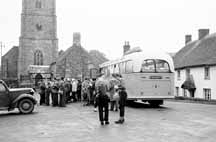 It was cheap to travel around Devon then and we were easily transported
to winding country lanes and roads with never a car to be seen:
thatched houses with tables of produce at the gate and the plates
on which you left the money: small cafes and tea shops where
time had stood still for 30 years: beaches, red cliffs and wild
Moors which seemed to defy the elements and time itself. I had
read books about Devon but none of them managed to convey the
staggering reality of that wonderful place and I was totally
unprepared for what I found when I arrived there in 1956.
It was cheap to travel around Devon then and we were easily transported
to winding country lanes and roads with never a car to be seen:
thatched houses with tables of produce at the gate and the plates
on which you left the money: small cafes and tea shops where
time had stood still for 30 years: beaches, red cliffs and wild
Moors which seemed to defy the elements and time itself. I had
read books about Devon but none of them managed to convey the
staggering reality of that wonderful place and I was totally
unprepared for what I found when I arrived there in 1956. |
 [PREVIOUS]
[HOME] [NEXT]
[PREVIOUS]
[HOME] [NEXT]